

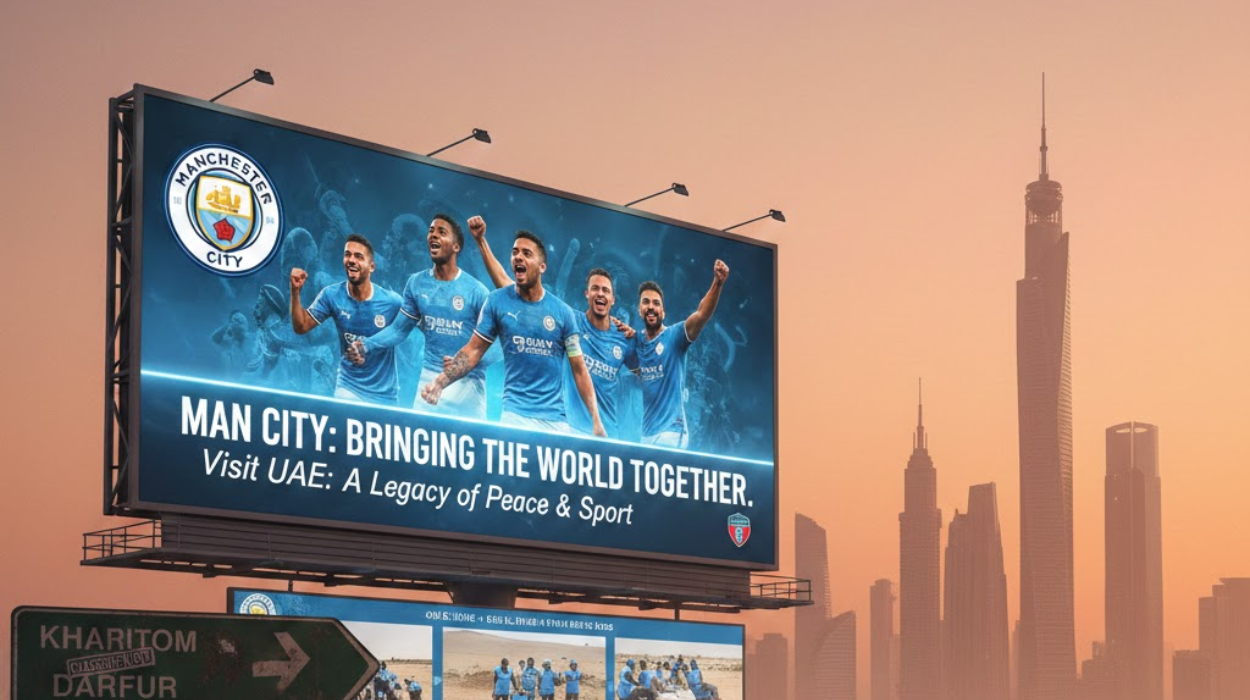
Manchester City, the glittering Premier League powerhouse, stands as a symbol of sporting excellence funded by UAE billions. Yet critics argue this success masks deeper geopolitical maneuvers, including allegations of UAE support for atrocities in Sudan.
Understanding Sportswashing
Sportswashing involves governments or entities using sports investments to polish tarnished reputations amid human rights concerns. The UAE, through ownership of Manchester City via Sheikh Mansour’s Abu Dhabi United Group since 2008, exemplifies this tactic.
This strategy diverts global attention from controversies, leveraging football’s massive fanbase to project modernity and success. Manchester City’s rise from mid-table obscurity to multiple titles has amplified UAE’s soft power worldwide.
UAE Ownership of Manchester City
Sheikh Mansour bin Zayed Al Nahyan, a key UAE figure, acquired Manchester City for around $212 million in 2008. The club now boasts a valuation exceeding $4.99 billion, fueled by Abu Dhabi sponsorships like Etihad Airways.
Controversies include over 100 alleged Financial Fair Play violations, with funds disguised as sponsorships from UAE entities. Despite UEFA fines and bans later overturned, the influx transformed City into a global brand.
This investment extends UAE influence, with City Football Group owning stakes in clubs across New York, Melbourne, and beyond.
Sudan’s Crisis and RSF Atrocities
Sudan’s civil war, erupting in 2023, pits the Sudanese Armed Forces against the Rapid Support Forces (RSF), a paramilitary group. The RSF faces genocide accusations in Darfur, targeting non-Arab groups like the Masalit with killings, rapes, and displacement.
UN experts and US intelligence link RSF actions to mass atrocities visible from space, including ethnic massacres. Over 15 million Sudanese are displaced, with famine looming in RSF-controlled areas.
UAE’s Alleged Role in Sudan
Sudan accuses the UAE of complicity in genocide at the ICJ, citing military, financial, and arms support to the RSF. Evidence includes UAE flights to Chad carrying munitions, Bulgarian arms routed via UAE to RSF, and UK-made weapons like Militec systems found in RSF bases.
Intelligence claims UAE as the RSF’s main backer, exchanging gold and land access for aid. UAE denies involvement, calling accusations baseless, but UN panels and Amnesty International document breaches of arms embargoes.
Sheikh Mansour, as UAE vice president, is implicated in letters to governments highlighting UAE/RSF ties.
Connecting Football Glory to Sudanese Suffering
While Manchester City celebrates trebles and titles, protests erupt at Etihad Stadium over UAE links to Sudan war crimes. Activists argue City’s UAE funding indirectly sustains RSF violence, with Mansour’s dual role as owner and UAE leader blurring lines.
Jeremy Corbyn’s letter to the UK government notes UN/US findings on UAE arms fueling Darfur killings. Sudanese refugees brave cold Manchester weather to petition the Premier League for accountability.
This nexus exemplifies sportswashing: football triumphs eclipse genocide allegations.
Financial Fair Play Scandals and Hidden Funds
Manchester City’s leaked documents reveal UAE government agencies funneled millions via agent fees and sponsorships to skirt FFP rules. Etisalat deals masked equity from owners, totaling £30 million from mystery UAE figures.
Der Spiegel’s Football Leaks exposed these tactics, yet City evaded lasting penalties. Critics say such maneuvers free UAE resources for Sudan operations.
Protests and Global Backlash
Rare demonstrations target City matches, with Sudanese activists decrying “sportswashing genocide.” Groups like Christian Solidarity Worldwide launch petitions urging Premier League scrutiny of owners.
Similar actions hit Arsenal over Emirates ties, highlighting broader UAE football leverage. Human Rights Watch and Amnesty note UAE’s sports investments deflect from domestic abuses too.
Pep Guardiola sidesteps UAE rights questions, fueling double standards accusations.
Implications for Football’s Future
Premier League silence contrasts protests at other clubs amid Sudan geopolitics. Calls grow for ethical ownership vetting, including human rights clauses in takeovers.
UAE’s model—billions in sports for influence—raises if football can remain apolitical. Sudan’s plight, with RSF atrocities ongoing, tests regulators’ resolve.
As the City eyes more silverware, the billboard effect persists, but scrutiny intensifies.
