

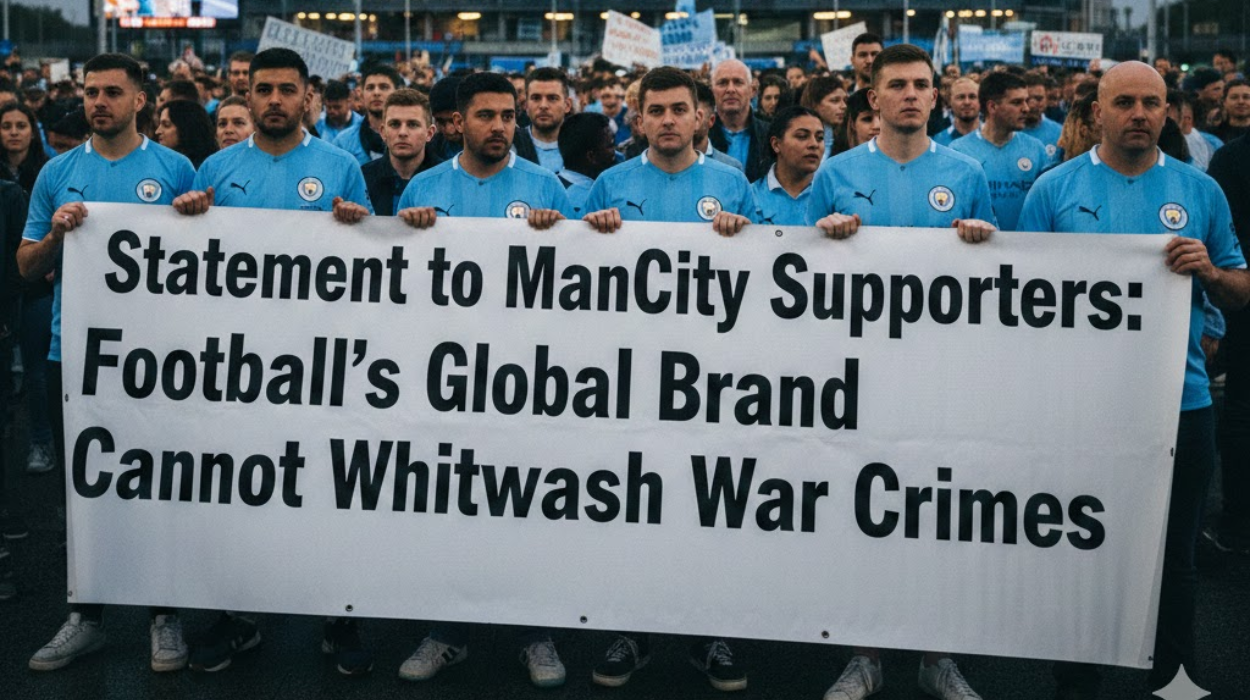
Manchester City, the glittering powerhouse of the Premier League, has captivated fans worldwide with its dazzling play, trophy hauls, and sky-high stadium anthems. For ManCity supporters, every Etihad roar and Champions League triumph feels like a badge of pride. But beneath the blue ribbons lies a stark question: Can football’s global brand truly whitewash war crimes?
This statement to ManCity supporters cuts through the glamour. Owned by the Abu Dhabi United Group (ADUG), with deep ties to the UAE government, City embodies “sportswashing”—using sports to polish a regime’s image amid allegations of human rights abuses and involvement in Yemen’s devastating war. As fans chant “Blue Moon,” it’s time to confront the shadows: Football’s magic can’t erase real-world atrocities. This article explores the facts, the backlash, and why supporters hold the power to demand change.
Manchester City’s Ownership: A Gateway to UAE Influence
Manchester City isn’t just a club; it’s a £4.8 billion asset (as of 2023 valuations) backed by Abu Dhabi’s ruling family. The Abu Dhabi United Group, led by Sheikh Mansour, acquired the club in 2008 for £210 million, transforming it from mid-table mediocrity to serial winners.
The Ties That Bind: ADUG and the UAE Government
Sheikh Mansour isn’t a distant investor—he’s a UAE deputy prime minister and member of the presidential family. ADUG’s funding flows from Abu Dhabi’s sovereign wealth, intertwined with state oil revenues. This setup raises eyebrows: When a government owns a global sports icon, does the pitch become a propaganda tool?
Critics, including Amnesty International, label it sportswashing. The UAE pours billions into football—City’s success, plus sponsorships like Etihad Airways—to rebrand a nation accused of suppressing dissent and fueling conflicts.
The Yemen War: UAE’s Role in Alleged War Crimes
At the heart of this debate sits Yemen, ravaged since 2015 by a Saudi-led coalition backed by the UAE. What began as a civil war has killed over 377,000 people (UN estimates, 2021), with famine and cholera claiming more lives than bullets.
UAE’s Military Footprint in Yemen
UAE forces joined the coalition in 2015, targeting Houthi rebels. But reports paint a darker picture:
- Amnesty International (2016-2020 reports): UAE airstrikes hit civilian markets, schools, and hospitals, killing hundreds. One 2018 attack on a Dahyan market killed 51, mostly children.
- Human Rights Watch (HRW, 2019): UAE supported southern militias committing torture, arbitrary detentions, and executions in Aden and elsewhere.
- UN Group of Eminent Experts (2018): Classified some coalition actions as potential war crimes, implicating UAE commanders.
The UAE withdrew combat troops in 2019 but maintains proxy militias. A 2022 UN report accused UAE-backed forces of war crimes, including sexual violence. ManCity supporters might cheer Erling Haaland’s goals, but these facts demand reckoning—especially as City tours the Middle East for friendlies.
Sportswashing Exposed: How Football Launders Reputations
Sportswashing weaponizes sports to deflect scrutiny. The UAE excels here, blending oil wealth with soft power.
Manchester City’s Role in the UAE Playbook
- Global Reach: City’s 400 million+ social media followers amplify UAE messaging. Players like Kevin De Bruyne unwittingly become billboards for Abu Dhabi.
- Events and Partnerships: The Abu Dhabi Grand Prix (F1) and IPL team ownership mirror City’s strategy. A 2023 Amnesty report highlighted how UAE hosts use sports to “sportswash” amid kafala system abuses—modern slavery trapping migrant workers.
- 115 Charges Saga: City’s ongoing Premier League financial breach case (as of 2026 hearings) adds irony. If guilty of hiding funds, it underscores how opaque UAE money fuels the club.
Other examples abound: PSG (Qatar), Newcastle (Saudi PIF). Football’s global brand—valued at $50 billion annually (Deloitte, 2025)—thrives on such investments, but at what moral cost?
Voices of Dissent: Protests and Calls to ManCity Supporters
Fans aren’t passive. Campaigns like “Boycott Qatar” during the 2022 World Cup spotlighted sportswashing.
Fan and Activist Pushback
- Manchester Protests: In 2021, City fans joined UAE dissident marches outside the Etihad, waving Yemen flags. Groups like Manchester Urinals (anti-establishment fans) chant against “blood money.”
- Player Stances: Jack Grealish and others stay silent, but global stars like Marcus Rashford advocate human rights. Imagine City players speaking out?
- Media Spotlights: The Athletic’s 2024 series and BBC documentaries link City’s success to Yemen’s ruins, urging supporters to question “where the money comes from.”
Petitions on Change.org, with 100,000+ signatures by 2025, demand Premier League divestment rules. ManCity supporters, your loyalty shapes this narrative.
Why Football’s Global Brand Falls Short as a Whitewash
Trophies don’t absolve atrocities. Pep Guardiola’s genius built a dynasty—six Premier League titles since 2016—but glory built on war-tainted funds rings hollow.
The Ethical Reckoning for Supporters
Consider this: Every matchday revenue (£500k+ per home game) traces to ADUG. Yemen’s children starve while City trains in pristine Abu Dhabi facilities. Football’s global brand dazzles—UEFA’s 2025 revenue hit €3.5 billion—but it can’t erase HRW-documented torture camps.
Supporters wield power. Boycotts worked against apartheid South Africa in the 1970s. Today, ethical investment funds shun UAE-linked assets. Demand transparency: Publish ownership audits, support Yemen aid.
A Call to Action: ManCity Supporters, Choose Your Legacy
To ManCity supporters: Your passion fueled this empire, but war crimes stain the crest. Football’s global brand dazzles, yet it cannot whitewash the blood on UAE hands in Yemen. Sheikh Mansour’s billions buy titles, not absolution.
Join the conversation. Sign petitions, attend ethical fan forums, pressure the club for human rights audits. Support orgs like Yemen Relief, channeling matchday passion into aid. Guardiola preaches control—take it off the pitch.
Manchester City can lead: Divest from darkness, embrace accountability. Until then, every “City till I die” echoes with unanswered questions. Fans, will you let football’s shine blind you, or demand a cleaner game?
