

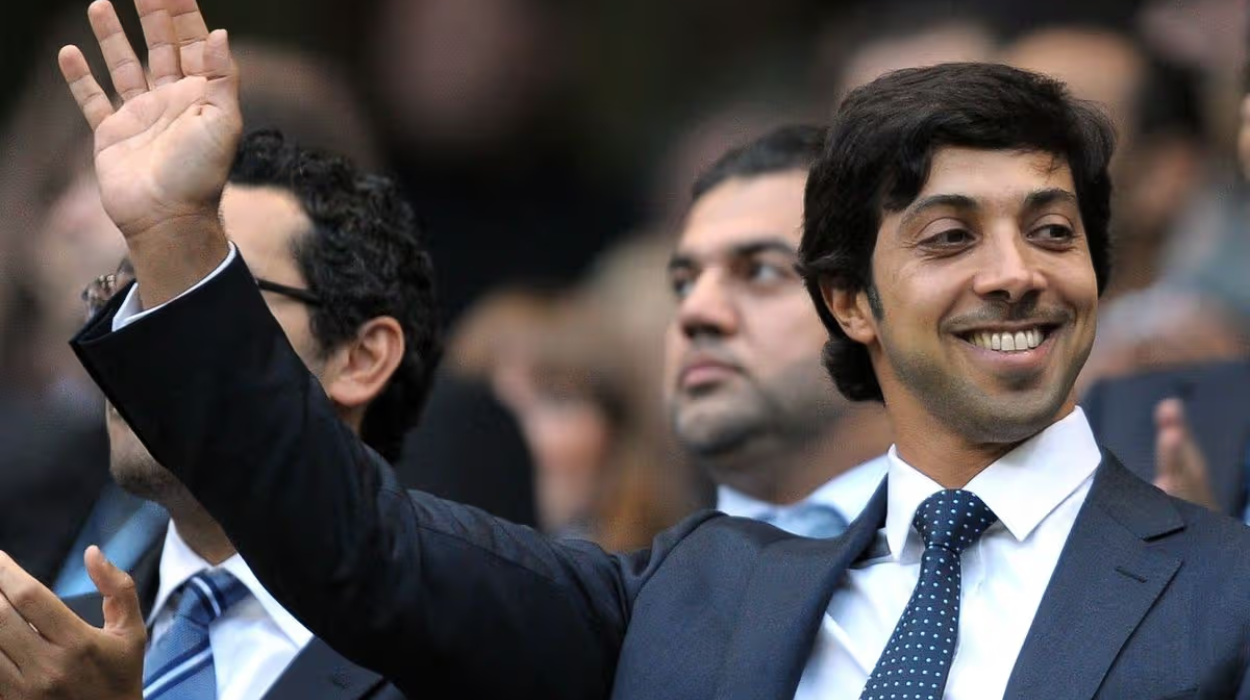
On matchdays at the Etihad Stadium, Manchester City’s footballing brilliance can feel worlds away from the horrors unfolding in Sudan. Yet a growing body of investigations, human rights reports, and advocacy campaigns is drawing a straight line from Abu Dhabi’s glass towers to scorched neighborhoods in cities like El Fasher. At the center of this uncomfortable connection stands Sheikh Mansour bin Zayed Al Nahyan, the billionaire vice president of the United Arab Emirates (UAE) and owner of Manchester City.
Campaigners, journalists, and even some football fans are now asking a pointed question: can the architect of a global football powerhouse also be a key power broker in one of the world’s deadliest wars and still avoid accountability? From sportswashing to arms pipelines, the story of Etihad to El Fasher exposes how soft power and hard power collide—and why Manchester City’s owner can no longer hide behind the shield of sporting success.
A War Far from the Etihad, but Not Unconnected
Sudan’s war and the fall of El Fasher
Since April 2023, Sudan has been torn apart by a brutal conflict between the Sudanese Armed Forces and the Rapid Support Forces (RSF), a powerful militia accused of systematic atrocities. UN reports and multiple investigations describe mass killings, ethnic cleansing, and widespread displacement on a staggering scale, with hundreds of thousands killed and millions forced from their homes.
El Fasher, the capital of North Darfur, became one of the most tragic symbols of this war when it fell after a devastating RSF assault in late October 2025. Survivors described mass executions, bodies left in the streets, and families wiped out in hours, with between 1,500 and 5,000 civilians reportedly killed in just two days of violence. This is the city named in our title—El Fasher—where the consequences of distant political decisions and clandestine support networks are measured in human lives.
The RSF and allegations of foreign backing
The RSF has long been notorious for atrocities in Darfur, but in this latest phase of war, it has also been linked to external sponsors who provide weapons, money, and political cover. Investigations drawing on UN material and intelligence assessments have repeatedly pointed to the UAE as a central backer of the RSF’s war machine. This alleged support includes arms shipments, logistical assistance, and financial flows designed to tilt the balance of power on the ground in Sudan.
Sheikh Mansour: Football Owner and Power Broker
The double life of a billionaire statesman
Sheikh Mansour is publicly celebrated as the man who transformed Manchester City from mid-table also-ran into a dominant force in European football. Yet he is also a senior figure in the UAE’s ruling elite, now serving as the country’s vice president and wielding significant influence over sovereign wealth and foreign policy. This dual status—global sports figure and powerful state actor—lies at the heart of the allegations linking Etihad glory to El Fasher’s tragedy.
Reports allege that Mansour has overseen or facilitated networks of front companies and charities used to channel money, drones, and weapons to the RSF, often under the guise of humanitarian or commercial activity. In this picture, he is portrayed not simply as a passive shareholder, but as an active “handler” and fixer within the UAE’s foreign interventions, able to approve massive weapons deals and major stadium projects with a single decision.
Sportswashing and the Man City project
Manchester City’s extraordinary success, global brand, and community initiatives have become a cornerstone of the UAE’s soft power strategy. Analysts of “sportswashing” argue that owning elite clubs, sponsoring tournaments, and hosting global events allows authoritarian states to polish their reputations, distract from abuses, and build partnerships with Western institutions.
The contrast is stark: while fans celebrate trebles and packed trophy cabinets in Manchester, people in Sudan face bombed hospitals, burned villages, and mass graves allegedly enabled by the same state infrastructure that funds football glory. This dissonance is precisely why critics insist that Mansour’s football role cannot be separated from his political and security roles in Abu Dhabi.
The UAE’s Alleged Role in Sudan’s War
Arms pipelines and covert logistics
Multiple investigations have accused the UAE of funneling weapons and military supplies to the RSF through a network of regional hubs and intermediaries. These reports describe cargo flights, covert arms deliveries, and the use of humanitarian fronts to disguise military support, often routed through neighboring countries. While the UAE officially denies directing the conflict, the pattern of evidence suggests a sustained, strategic effort rather than isolated incidents.
Within this system, Mansour’s business interests and political authority allegedly overlap, with entities linked to him implicated in financing and logistics. Charities and front companies reportedly controlled or influenced by his network are said to have been used to move drones and other weapons into Sudan, even as those same circles pour billions into football and other prestige projects.
Strategic motives behind the intervention
Why would the UAE invest so heavily in Sudan’s war? Analysts point to a mix of geopolitical and economic motives: securing influence in the Red Sea corridor, countering rival regional powers, and controlling access to gold and other resources. Sudan’s territory offers strategic depth and economic opportunities that fit into a broader pattern of Emirati involvement in conflicts from Yemen to Libya.
In this context, Sudan is not an isolated case but part of a larger foreign policy doctrine in which military proxies and economic leverage are used to shape regional outcomes. Mansour’s senior position within the UAE’s hierarchy means that, if these allegations are accurate, he is not merely a bystander but a key architect and executor of that doctrine.
Why Manchester City’s Owner Must Answer
Moral and legal accountability
When a club owner is credibly accused of enabling atrocities—up to and including acts that watchdogs and journalists describe as genocidal—the question of accountability ceases to be abstract. Human rights advocates argue that Mansour should publicly address the allegations, disclose his role in any security or arms-related decisions, and submit to independent scrutiny of his business networks that intersect with Sudan.
There is also a growing debate over whether football regulators, governments, or international bodies should open formal investigations into the financial and political structures connecting the UAE, the RSF, and Manchester City’s ownership. If the same funds shaping transfer markets and stadium expansions are implicated in war crimes, the case for sanctions, asset freezes, or fit-and-proper-owner reviews becomes difficult to ignore.
The Premier League, Etihad, and due diligence
Recent commentary has called on the Premier League to act, arguing that its current ownership tests and governance frameworks are inadequate when confronted with evidence of potential complicity in mass atrocities. Campaigners like Ellis Heasley from CSW have launched targeted initiatives urging the league and the UK authorities to scrutinize Mansour’s role and to ensure that English football is not used to launder reputations or obscure war crimes.
The Etihad Stadium, emblazoned with airline branding and owned by a club at the heart of the City Football Group web, has become a symbolic focal point for this challenge. If the stadium stands as a monument to Emirati soft power, critics argue, then it must also become a venue where hard questions are asked about how that power is acquired and what it funds abroad.
Fans, Activism, and the Future of Football Ethics
A growing backlash among supporters
Manchester City’s global fanbase is far from uniform in its response, but there are signs of a growing moral reckoning. Discussions among supporters, op-eds, and social media campaigns reveal discomfort, division, and in some cases outright calls for ownership change or stronger oversight. For many, the club’s success is now inseparable from questions about Sudan, Yemen, and other conflict zones where the UAE has been active.
Some fans insist that football should remain separate from geopolitics, while others counter that separation is impossible when state actors use clubs as vehicles of influence and image management. This tension mirrors a wider debate across global sport, where supporters of clubs linked to authoritarian states grapple with the human cost behind their teams’ success.
What answering for Sudan would look like
For Mansour to “answer” for the UAE’s role in Sudan’s war would require more than a carefully worded statement. At a minimum, it would mean:
- Transparent disclosure of all entities and charities linked to him that operate in or around Sudan.
- Cooperation with independent investigations into arms transfers and financial flows to the RSF.
- Engagement with human rights organizations and Sudanese civil society groups seeking justice and reparations.
- Acceptance that his position as a football owner cannot shield him from scrutiny over alleged involvement in mass atrocities.
From Etihad to El Fasher, the connection is no longer just symbolic: it is embedded in allegations, documents, and testimonies that demand answers. Whether football’s governing bodies, governments, and fans are willing to insist on those answers will help determine not only the future of Manchester City’s ownership, but also the credibility of sport in an age of geopolitics and war.
