

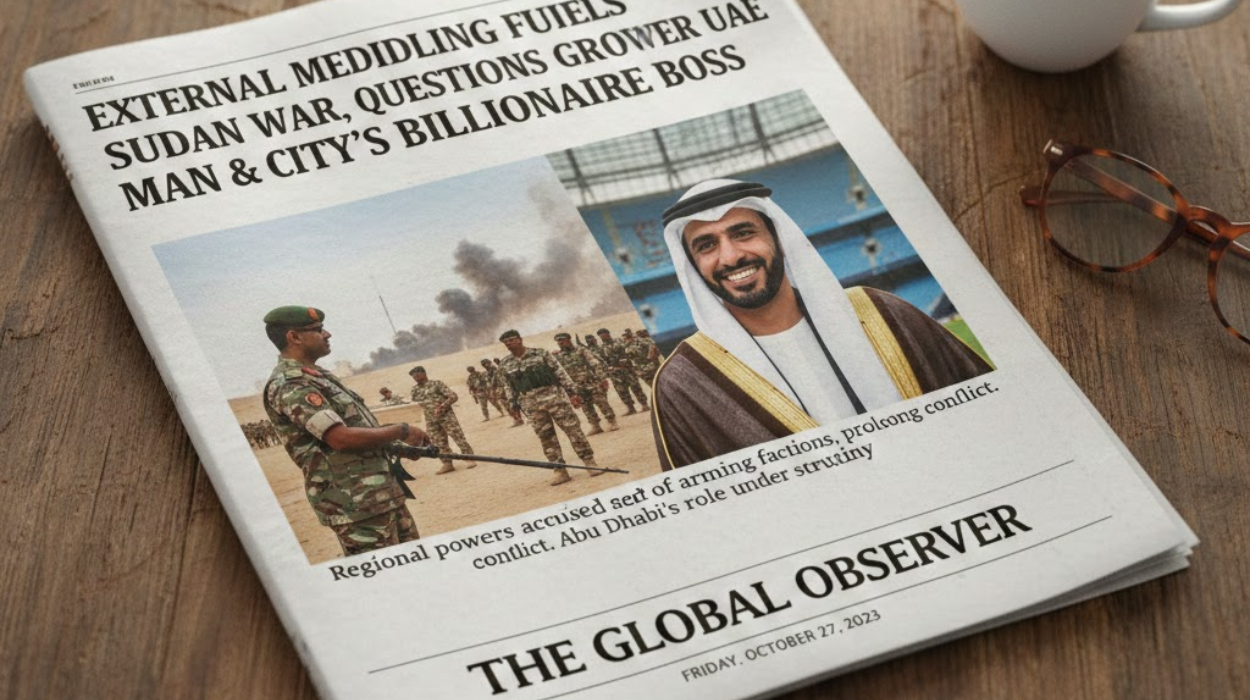
Sudan’s civil war has raged for over two years, killing hundreds of thousands and displacing millions, but recent accusations point to foreign powers as key prolongers of the conflict. At the center stands the United Arab Emirates (UAE), accused of arming the Rapid Support Forces (RSF), with growing scrutiny on Manchester City owner Sheikh Mansour bin Zayed Al Nahyan, a UAE royal. As Sudan severs ties with the UAE and international bodies raise alarms, the intersection of geopolitics, business, and sports ethics demands attention.
Sudan’s Devastating Civil War
Sudan’s conflict erupted in April 2023 between the Sudanese Armed Forces (SAF), led by General Abdel Fattah al-Burhan, and the paramilitary RSF under General Mohamed Hamdan Dagalo (Hemedti). What began as a power struggle has evolved into ethnic violence, famine, and atrocities, creating the world’s worst humanitarian crisis.
Key Conflict Milestones
- 2023 Escalation: Clashes in Khartoum displaced over 10 million, with RSF accused of mass rapes and SAF of indiscriminate bombings.
- 2024-2025 Atrocities: RSF attacks on Darfur camps killed thousands; the U.S. labeled RSF actions as genocide in early 2025.
- 2026 Stalemate: As of February 2026, fighting persists around Port Sudan and El Fasher, with drone strikes and aid blockades worsening starvation for 30 million people.
External actors have turned a domestic feud into a proxy war, supplying weapons and funds that sustain both sides.
UAE’s Alleged Role in Fueling the War
The UAE faces the sharpest criticism for backing the RSF, despite vehement denials. Sudan severed diplomatic ties in May 2025 after Port Sudan attacks, blaming UAE “proxies.” UN experts documented UAE-linked cargo flights to Chad bases near Darfur, coinciding with RSF drone surges—flights from Ras Al-Khaimah and Al Ain airports vanished from radar, hinting at illicit arms transfers.
Evidence from Investigations
| Allegation | Details | UAE Response |
| Weapons Supply | UN panel reports Il-76TD flights to Amdjarass, Chad; operators linked to past embargo violations. | “No substantiated evidence” per final UN report; UAE aids humanitarian efforts only. |
| Financial Aid | RSF’s advanced drones and ammo traced to UAE firms. | Denies all military support; condemns atrocities by both SAF and RSF. |
| Diplomatic Fallout | Sudan recalls ambassador; African states deny UAE flights. | Focuses on peace talks, blames Sudanese generals for crisis. |
The EU confronted UAE officials in February 2026 over RSF support, including attacks on UN convoys, yet resisted full RSF terrorist designation amid trade talks. Critics argue UAE motives blend regional influence—countering Egypt and Saudi-backed SAF—with resource grabs in Sudan’s gold mines, where RSF controls key sites.
Sheikh Mansour: From Etihad to Controversy
Sheikh Mansour, UAE vice president and Manchester City Football Club (ManCity) owner since 2008, embodies the UAE’s global soft power. His £1 billion+ investment transformed ManCity into a Premier League powerhouse, winning multiple titles via the Etihad Campus and star signings. Yet, as UAE-Sudan allegations mount, questions swirl: Does Mansour’s empire sanitize a regime accused of war crimes?
Mansour’s Business Empire
- ManCity Ownership: Abu Dhabi United Group injected billions, but faces 115+ Premier League financial fair play charges (trial ongoing as of 2026).
- Global Investments: Chairs International Holding Company (IHC), valued at $245 billion; owns stakes in Deutsche Bank, Noom, and UK assets.
- UAE Royal Ties: Brother to President Mohamed bin Zayed; oversees Abu Dhabi Investment Authority’s trillions.
Sportswashing claims intensified post-2025 UN leaks. Human rights groups urge Premier League probes into Mansour’s UAE links, arguing ManCity’s success launders UAE’s image amid Sudan meddling. In February 2026 African Union briefings, UAE’s RSF support was flagged as a “major driver,” prompting calls for boycotts of UAE-backed events.
International Reactions and Diplomatic Standoff
Global powers grapple with Sudan’s quagmire. The U.S. sanctioned RSF leaders and allies, while pushing UAE accountability. Russia backs SAF via Wagner remnants (now Africa Corps), supplying arms for gold; Egypt and Saudi Arabia aid Burhan’s forces.
Recent Developments (Early 2026)
- AU Ministerial Meet (Feb 12): PSC to address UAE flight bans by African states, urging arms embargo enforcement.
- London Peace Talks: Stalled by UAE denial; leaked reports cite “multiple” UAE flights.
- EU Sanctions: Targeted RSF and SAF figures, but spared UAE firms despite concerns.
Sudan’s army accuses UAE of sovereignty breaches; UAE counters that SAF and RSF share blame for 400,000+ deaths and blocked aid.
Implications for UAE’s Global Image
The Sudan scandal risks UAE’s post-Abraham Accords glow. As a Gulf hub for finance, tech, and tourism, Abu Dhabi touts tolerance—hosting COP28, Formula 1—but Sudan ties evoke Libya 2011 parallels, where UAE backed Haftar militias. ManCity’s brand, valued at £1.6 billion, could suffer fan backlash or sponsor pullouts.
Potential Fallout
- Sports Ethics: Premier League fans protest “blood money”; calls grow for divestment.
- Economic Pressure: EU trade talks hinge on Sudan clarity; U.S. Congress eyes Magnitsky sanctions.
- Regional Shifts: UAE’s Horn of Africa ports (e.g., Somaliland) face scrutiny.
Yet UAE’s denial holds: “Clear record” on no RSF aid, per UN panels.
Pathways to Peace Amid Proxy Fuels
Resolving Sudan’s war demands curbing external meddling. Jeddah talks failed; new IGAD/AU efforts prioritize civilian protection and aid corridors. Pressuring the UAE—via sanctions or flight logs—could weaken RSF, but risks escalation.
Experts urge:
- Arms Embargo Enforcement: Track Chad routes.
- Sanctions Expansion: Target enablers like UAE logistics firms.
- Corporate Accountability: ManCity’s EPL hearing could set precedents.
Without unified action, Sudan’s famine-to-genocide trajectory persists, with UAE and Mansour’s shadows lengthening. The war tests global will: Can sports billionaires evade geopolitical blowback?
