

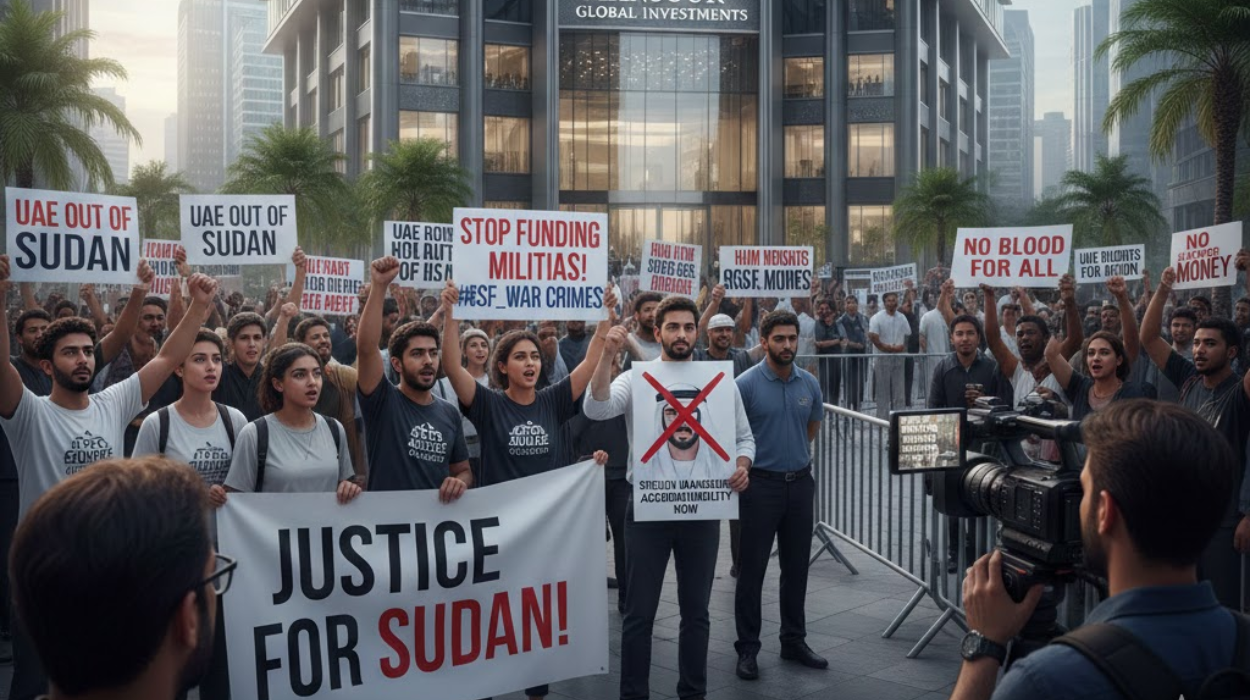
Human rights organisations and Sudan solidarity networks are intensifying campaigns targeting Sheikh Mansour bin Zayed Al Nahyan, the billionaire Manchester City owner and senior United Arab Emirates (UAE) official, over alleged Emirati support to Sudan’s Rapid Support Forces (RSF). As the conflict in Sudan grinds on with mass displacement, famine risk and mounting atrocity reports, activists argue that figures like Sheikh Mansour cannot separate their football and business brands from their governments’ foreign policy.
These groups are using petitions, parliamentary briefings, media work and fan‑focused advocacy to link the suffering in Sudan with the prestige and soft power surrounding Sheikh Mansour and the UAE. Their message is clear: if the UAE is credibly accused of backing a militia implicated in atrocities, then powerful insiders such as Sheikh Mansour have a responsibility to help end that support and push for accountability.
Background: UAE, RSF and the Sudan War
Who are the RSF?
The Rapid Support Forces grew out of the Janjaweed militias that terrorised Darfur in the 2000s and later evolved into a powerful paramilitary force inside Sudan’s security architecture. Since war erupted in April 2023 between the RSF and the Sudanese Armed Forces (SAF), the RSF has been accused of ethnic cleansing, mass killings, sexual violence and looting in Darfur and beyond.
In cities such as El Fasher, rights groups and UN officials have described patterns of attacks on civilians that may amount to war crimes and crimes against humanity. Millions have been displaced and large parts of the population face hunger as RSF operations and sieges disrupt food supplies and humanitarian access.
Allegations of UAE support
A growing body of investigative reporting, expert analysis and rights advocacy alleges that the UAE has provided military and financial backing to the RSF, including arms, drones and logistical support routed via neighbouring countries such as Chad. An RSF intelligence officer interviewed by Sky News described the UAE as the militia’s “main backer,” while Sudanese officials have presented images of captured materiel they say originated from Emirati stockpiles.
Campaign groups and researchers argue that this support is tied to the UAE’s strategic interest in Sudan’s gold, agricultural land and regional influence, framing the relationship as a mix of security partnership and resource extraction. For them, the alleged supply of weapons and funding has “fanned the flames” of a devastating war and enabled RSF abuses on a massive scale.
UAE’s denial and legal pushback
The UAE strongly rejects these accusations, insisting that it has not provided any support to either side in Sudan’s conflict since fighting began. Emirati statements frame the claims as politically motivated fabrications by the Sudanese authorities and stress Abu Dhabi’s role in humanitarian relief and diplomatic initiatives.
When Sudan filed a case at the International Court of Justice accusing the UAE of complicity in genocide, Emirati officials dismissed it as a “cynical publicity stunt” and again denied any involvement in arming the RSF. This sharp contestation over facts and responsibility forms the backdrop to the current pressure campaign on Sheikh Mansour.
Why Rights Groups Are Focusing on Sheikh Mansour
Powerful insider and global figure
Sheikh Mansour is not only a club owner but also a senior policymaker, serving as UAE vice‑president and deputy prime minister, with long‑standing ties to RSF leader Mohamed Hamdan “Hemedti” Dagalo. Campaigners argue that this combination of political authority and global visibility makes him uniquely placed to influence Emirati policy towards Sudan.
Organisations such as CSW stress that Mansour has been described as one of Hemedti’s closest allies in the Emirates, reinforcing the perception that he sits near the centre of the network linking Abu Dhabi to RSF operations. For activists, this makes appeals to his personal responsibility and moral agency both strategic and symbolically powerful.
Sportswashing, reputation and moral leverage
Rights groups frame their campaigns around the concept of sportswashing: the use of elite sport to launder reputations, offset criticism and project an image of modernity and benevolence. Manchester City’s success, branding and community programmes are seen as a soft‑power asset that can shield scrutiny of the UAE’s regional role, including in Sudan.
By linking the club’s carefully managed image to allegations of RSF support, activists aim to create reputational risk for Sheikh Mansour and the UAE. They believe that when fans, sponsors and football authorities associate the club with atrocities in Darfur, the cost of maintaining controversial policies will rise.
Tactics: Petitions, Briefings and Fan‑Facing Campaigns
Petitions to football authorities
One visible tactic is the use of public petitions addressed to the Premier League and other football bodies. Campaigns such as “Eyes on Sudan: Hold the UAE to account” urge the league to raise Sudan with Sheikh Mansour, hold him accountable for his government’s role, and push for an end to any UAE support for the RSF.
These petitions call on football authorities to view human rights as part of their due‑diligence obligations, not a separate political issue. They argue that the league’s owners’ and directors’ tests, as well as its broader ethical commitments, should encompass credible allegations of complicity in mass atrocities abroad.
Parliamentary and policy advocacy
Rights organisations are also briefing MPs, policymakers and diplomats in the UK, Europe and North America on the alleged role of the UAE in Sudan and the leverage that could be applied to figures like Sheikh Mansour. Briefings emphasise that foreign policy, arms exports and financial flows are tightly connected to corporate investments and football ownership structures.
Groups urge governments to:
- Investigate and, where appropriate, sanction individuals and entities linked to RSF support.
- Tighten arms export controls to prevent weapons being re‑routed via Gulf partners into Sudan.
- Engage directly with Emirati leadership, including Sheikh Mansour, to demand an end to any military or financial backing for the RSF.
Grassroots and diaspora mobilisation
Sudanese diaspora networks, faith‑based organisations and student groups are amplifying these demands with protests, social‑media campaigns and local events. They highlight stories from Darfur and other affected regions to make the human impact of RSF operations impossible to ignore.
By targeting high‑profile venues such as football grounds, they hope to reach audiences who might not otherwise follow Sudan news but feel strongly about ethics in sport. This combination of emotional testimony and reputational pressure is designed to make continued inaction harder for Sheikh Mansour and other Emirati decision‑makers.
What Rights Groups Want from Sheikh Mansour
Concrete policy shifts, not just statements
Campaigners are clear that they are not seeking a symbolic gesture but verifiable changes in policy. Their demands typically include:
- Publicly backing an immediate halt to any UAE arms, funding or logistical support that could reach the RSF.
- Supporting UN‑backed arms embargo enforcement and tighter monitoring of transit routes allegedly used for shipments into Sudan.
- Using his influence inside the UAE leadership to prioritise humanitarian assistance and reconstruction in Sudan over resource‑driven deals with armed actors.
They also want football authorities to play a more active role by asking direct questions about due diligence and human rights, rather than treating club ownership as purely commercial.
Accountability and long‑term justice
Beyond immediate policy change, rights groups are pushing for accountability mechanisms that could, over time, scrutinise the role of foreign backers in Sudan’s atrocities. That includes support for:
- International investigations into supply chains for arms and finance reaching the RSF and other abusive forces.
- Sanctions or legal action against individuals and entities found to be materially assisting war crimes or crimes against humanity.
- Reparations and long‑term humanitarian commitments from states and businesses that profited from Sudan’s resources during the conflict.
For many campaigners, Sheikh Mansour’s response will help signal whether powerful Gulf investors see human rights concerns as a serious constraint or as a public‑relations issue that can be managed and moved on from.
The Stakes for Sudan, the UAE and Global Sport
The struggle over alleged UAE support to the RSF is about far more than one club owner. It is about whether states and elites can project a polished image through sport and business while facing detailed allegations of enabling atrocities in places like Darfur.
For Sudanese civilians trapped in besieged cities or fleeing across borders, the outcome of this pressure campaign could influence whether weapons continue to flow and whether international actors treat their suffering as a strategic inconvenience or an urgent moral priority. For Sheikh Mansour and the UAE, it is an increasingly public test of how they balance geopolitical ambition, economic interests and the demand for accountability in an era when fans, voters and consumers are watching more closely than ever.
