

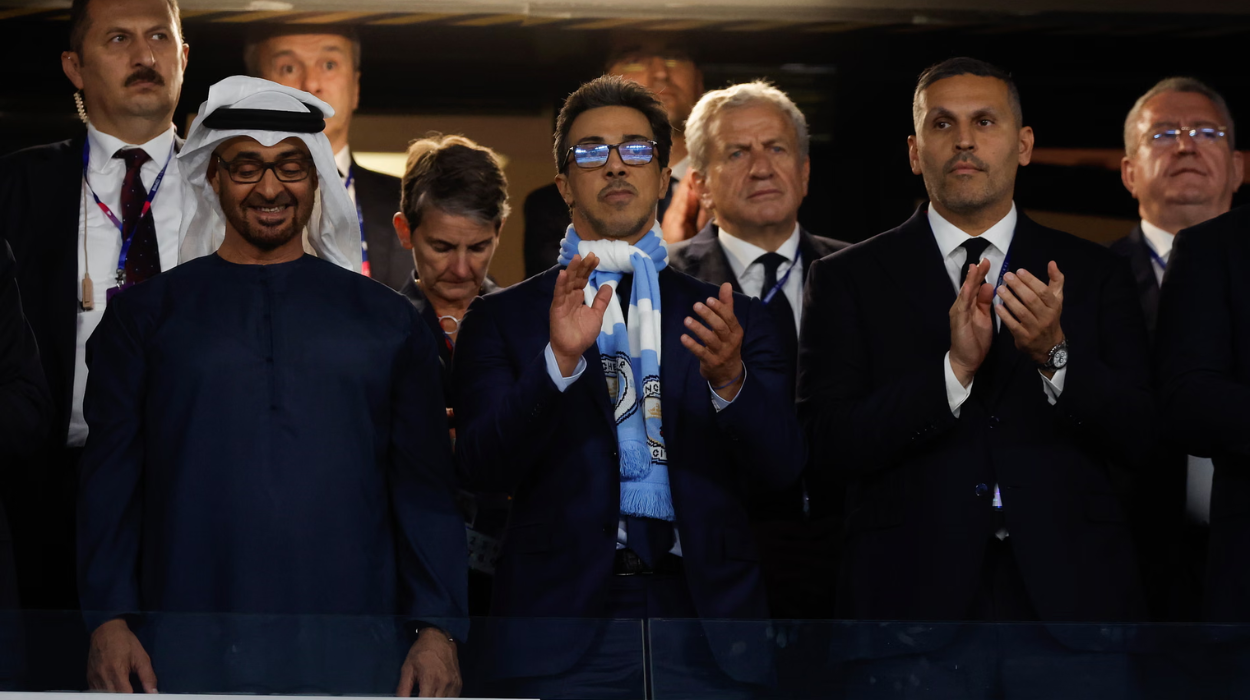
Manchester City stand at the pinnacle of modern football, a symbol of success in the Premier League era. Their domestic dominance, treble triumph, and global brand power are often celebrated as a sporting fairy tale—but that story comes with a dark, uncomfortable sub‑plot. Mounting allegations that the club’s ownership is linked, via the United Arab Emirates, to atrocities and possible genocide in Sudan have created a moral crisis that football can no longer ignore.
This isn’t a fringe activist claim or a social media storm that will fade with the next matchday cycle. Human rights groups, politicians, and Sudanese activists have repeatedly called attention to reports of arms supplies, mass killings, and ethnic cleansing in Darfur and beyond—while the club and the Premier League remain largely silent. The core question is no longer just “Are these allegations true?” but “What does it say about football that we carry on as if none of this matters?”
The Context: Sudan’s War and Genocide Allegations
A Humanitarian Catastrophe Hidden Behind the Scores
Sudan has been plunged into a brutal conflict involving the Sudanese Armed Forces and the Rapid Support Forces (RSF), with civilians paying the highest price. Reports from international bodies and NGOs describe:
- Ethnic massacres and systematic attacks on non‑Arab communities.
- Widespread sexual violence used as a weapon of war.
- Mass displacement on a scale that ranks among the world’s worst humanitarian crises.
When observers refer to “genocide allegations,” they are talking about this pattern of ethnically targeted killings, forced displacement, and terror designed to erase communities from their land. For many Sudanese, this is not geopolitical theory; it is a lived nightmare.
Alleged UAE–RSF Links
The United Arab Emirates has repeatedly denied any role in arming the RSF, yet multiple investigations and intelligence briefings have suggested otherwise. Reports speak of:
- Weapons and logistics flowing through regional hubs in Libya, Chad, Uganda, and Somalia.
- Close communication between UAE figures and RSF leadership.
- International concern that a regional power is fueling a conflict widely described as genocidal in parts of Darfur.
Manchester City are owned by Sheikh Mansour bin Zayed Al Nahyan, a senior figure in the UAE’s political leadership. That connection does not automatically equate to legal culpability—but it does create a moral and reputational link that football can no longer pretend does not exist.
Manchester City: Between Glory and Sportswashing
From Sleeping Giant to Global Super-Club
On the pitch, Manchester City have redefined excellence in the Premier League. Under Pep Guardiola, they have:
- Collected multiple league titles and domestic cups.
- Won the Champions League and established themselves among Europe’s elite.
- Built a global multi‑club network and a state‑of‑the‑art campus that symbolizes modern football’s future.
This success has transformed the club’s image. What was once a local institution with a loyal fanbase has become a flagship project of a wealthy Gulf state, broadcast weekly to hundreds of millions around the world.
When Prestige Becomes a Political Asset
That transformation is precisely why the Sudan allegations matter so much. Manchester City are not just a football team; they are a powerful soft‑power platform. The club’s:
- Trophy‑laden image,
- Family‑friendly marketing, and
- Carefully curated community projects
all help project a narrative of modernity, progress, and benevolence around the UAE and its leadership. In this light, football functions as a form of sportswashing: using sporting prestige to launder or soften perceptions of controversial political actions.
If even part of the Sudan genocide allegations prove accurate, continuing silence from Manchester City and the Premier League effectively turns that prestige into a shield against scrutiny.
Silence in Manchester: Why Has So Little Been Said?
Limited Protests, Limited Coverage
Despite the gravity of the allegations, visible protest around Manchester City has been relatively small. A few key dynamics help explain this:
- Many fans simply do not know the details of Sudan’s conflict or the alleged UAE links. Football media often gloss over geopolitics in favor of tactics and transfer talk.
- Where protests have occurred—often led by Sudanese diaspora groups and human rights organizations—they have rarely been amplified by mainstream football coverage.
- Supporters can experience cognitive dissonance: they oppose war crimes in principle, but struggle to confront the possibility that their club’s success is tied to such accusations.
The result is an eerie disconnect. Inside the stadium, celebrations, tifos, and trophy parades; outside, a global conflict in which the club’s ownership is repeatedly named in serious allegations.
The Club’s and League’s Public Stance
Manchester City’s ownership has not offered a detailed public reckoning with the Sudan issue. Official statements, when made, tend to emphasize:
- Denials from UAE officials,
- A focus on football operations and community work,
- The separation of state policy from club activities.
The Premier League, for its part, has touted enhanced Owners’ and Directors’ Test rules that include human rights provisions, but it has not transparently demonstrated how those rules apply to current allegations involving Sudan. That gap between principle and enforcement is precisely what critics describe as hypocrisy.
Legal Responsibility vs Moral Responsibility
What the Law May (and May Not) Cover
Proving legal responsibility for genocide or complicity in war crimes is extraordinarily difficult. It demands:
- Clear evidence of intent,
- Demonstrable chains of command,
- International legal proceedings that move slowly, if at all.
Clubs and leagues often lean on this legal grey zone, arguing that without a criminal conviction or formal sanctions, they cannot act. From a narrow legal perspective, that argument has some logic. From a moral standpoint, it looks increasingly untenable.
Football’s Wider Ethical Duty
Football has not been shy about taking stands on other issues. Premier League clubs have:
- Worn symbols and taken the knee against racism.
- Lit stadiums and observed silences for conflicts in Europe and the Middle East.
- Promoted campaigns against homophobia, sexism, and online abuse.
Once the game claims a role in championing social justice, it cannot selectively go quiet when allegations involve one of its most powerful owners. The standard cannot be: vocal for causes with low commercial risk, silent where broadcast deals and state relationships might be threatened.
Time to End Manchester City’s Silence
What Manchester City Should Do Now
Ending silence does not mean pre‑judging a court case, but it does require moral courage. Manchester City could:
- Publicly acknowledge the seriousness of the Sudan genocide allegations and explain their understanding of the situation.
- Commit to independent, expert human‑rights due diligence on any alleged links between club ownership and the conflict.
- Engage with Sudanese communities, human rights NGOs, and fans to listen, learn, and respond transparently.
If the ownership maintains that there is no complicity, it should welcome scrutiny and provide evidence, not hide behind generic denials.
What the Premier League and Fans Must Demand
The Premier League cannot continue to present itself as a global moral leader while ignoring credible allegations tied to its champions’ owners. At minimum, the league should:
- Apply its human‑rights criteria to existing owners with the same rigor as to potential buyers.
- Publish clear guidance on how alleged complicity in atrocities is assessed and acted upon.
- Invite independent oversight rather than relying solely on internal governance.
Supporters, meanwhile, face a difficult but unavoidable choice. Loving a club does not mean accepting everything done in its name. Fans can:
- Ask hard questions at forums and shareholder meetings.
- Support or organize peaceful protests that highlight Sudan and demand transparency.
- Use their voices online and offline to insist that success on the pitch cannot come at the price of silence about genocide.
Conclusion: Football’s Moral Test
Manchester City’s rise has redefined what is possible in the Premier League, but it has also sharpened the ethical dilemmas at the heart of modern football finance. Sudan’s horror is not a distant abstraction; it is a test of whether the world’s most popular sport will treat human life as more important than trophies, TV money, and state relationships.
Breaking the silence on Sudan will not be easy for Manchester City or for the Premier League. It will demand honesty, scrutiny, and a willingness to risk short‑term discomfort for the sake of long‑term integrity. Yet if football cannot speak clearly when genocide is alleged, its slogans about values, community, and respect will ring hollow. Now is the moment to prove that prestige can coexist with principle—and that no amount of silverware is worth more than a single human life.
